The Textured Crop: How to Ask For It, How to Style It
The textured crop has been the default modern men’s haircut for the better part of a decade, which means two things: your barber definitely knows it, and there are at least six different cuts hiding behind the same name. Walking in and saying textured crop is how people end up with something they did not want.
What the cut actually is
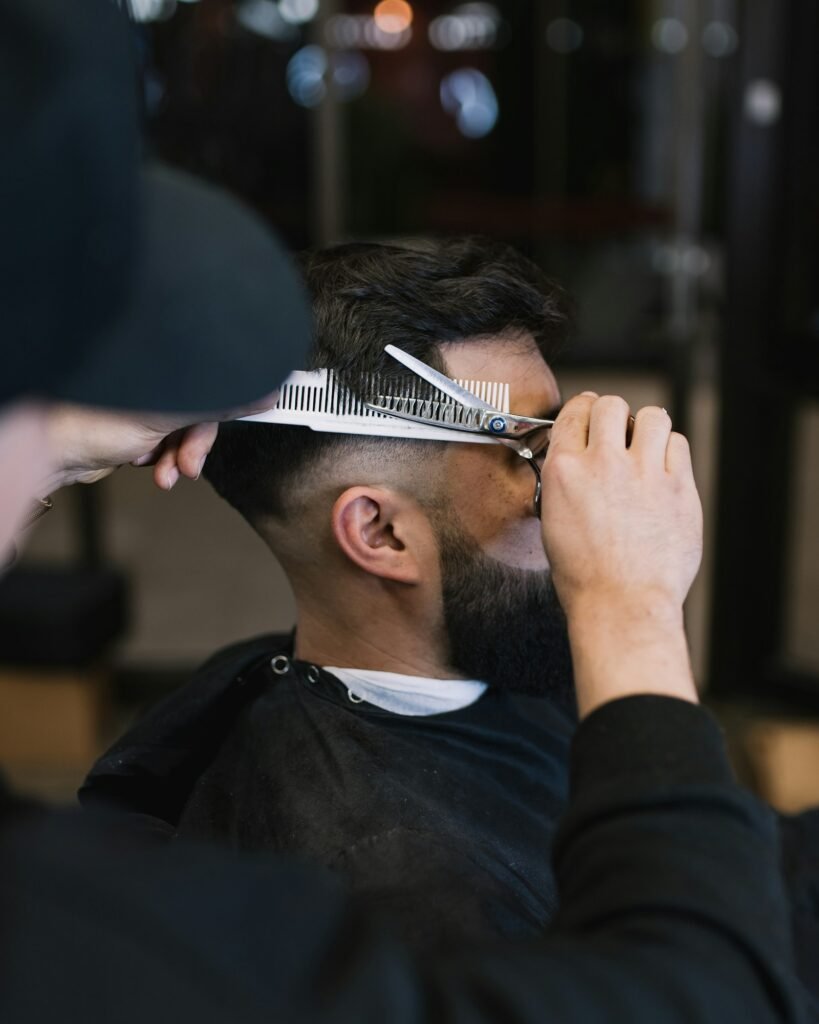
Short back and sides, a fringe worn forward, and a top cut with deliberately uneven ends so it separates into pieces rather than sitting as one flat mass. That separation is the whole point — it is what distinguishes a crop from a plain short cut.
It suits most face shapes, works with straight and wavy hair, is forgiving of a receding hairline, and takes well under two minutes to style. That combination is why it has lasted.
The four decisions to make before you sit down
How the sides finish. A skin fade goes to bare skin for maximum contrast and needs re-cutting every two to three weeks. A taper fade keeps a little length at the bottom and grows out far more gracefully. A scissor crop keeps the sides longer and softer, which suits thicker hair and older faces.
Where the fade starts. Low sits just above the ear, mid at the temple, high near the parietal ridge. High fades are sharper and more dramatic; low fades are more conservative and more forgiving as they grow.
Fringe length. Anywhere from a blunt inch to a longer piece falling toward the brows. Shorter is lower maintenance; longer gives you more to play with but needs product.
Fringe edge. Blunt and straight across reads sharper and more graphic. Point cut and irregular reads softer and more natural, and is generally the better choice if your hairline is uneven or receding.
What to say, word for word
Something close to: I would like a textured crop. Low taper fade on the sides, starting just above the ear. Leave about two inches on top, point cut so it separates. Fringe forward, just above the eyebrows, with a soft irregular edge rather than blunt. Keep some weight through the crown.
Adjust the specifics, keep the structure. Naming the fade type, the fade height, the top length, the cutting technique and the fringe edge is what separates a good result from a lottery.
Two additions worth making. Ask them to check the crown — a cowlick there changes how the fringe sits, and a barber who accounts for it will cut differently. And ask for it slightly longer than your target on a first visit with a new barber. Taking more off is trivial; putting it back is not.
Styling it in ninety seconds
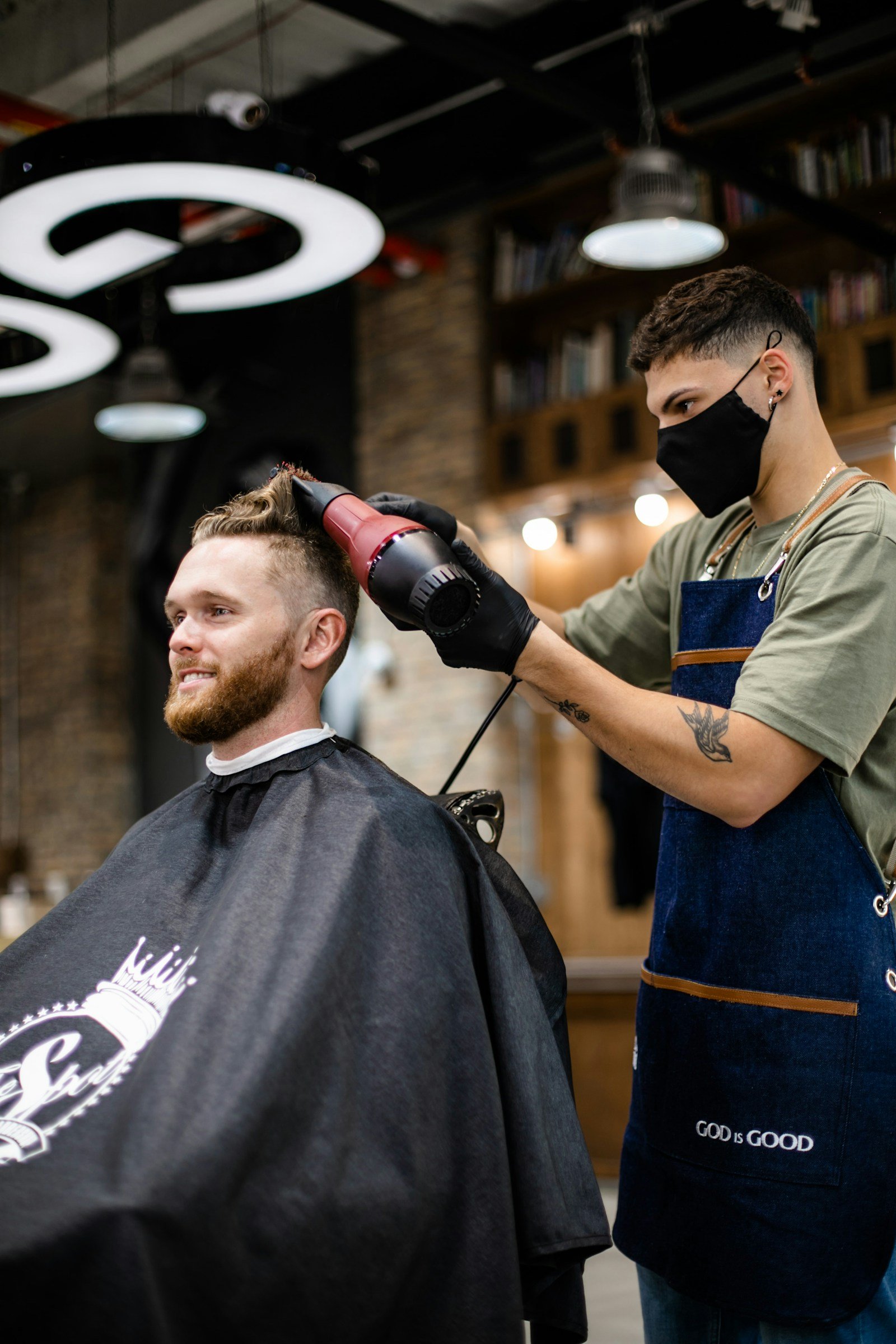
Start with towel-dried hair, damp rather than wet. Rough dry with a hairdryer on medium, pushing the fringe forward with your fingers as you go. Fifteen seconds is enough, and this step matters more than the product.
Take a small amount of matte clay or paste — genuinely small, roughly a pea. Warm it between your palms until it is almost invisible, then work it through from the back forward, finishing at the fringe. Loading the front first is the most common mistake and leaves the fringe heavy and clumped.
Finish by pinching pieces of the fringe between your fingertips to define the separation. That is the texture in textured crop.
Product, briefly
Matte clay for thick hair, matte paste for medium, sea salt spray plus a touch of powder for fine hair. Avoid anything with shine: gel, wax and pomade all clump the ends together and destroy the separation the cut was built around.
Keeping it
Skin fades need attention every two to three weeks, tapers every four, scissor crops every five to six. The top outlasts the sides, so if you are stretching appointments, ask for a sides-only tidy in between — most barbers will do it quickly and cheaply.
When it does grow out, it grows into a French crop and then a longer textured fringe, both of which are perfectly good haircuts. That is a large part of why the crop is worth choosing in the first place.