The Only Five Products a Minimal Haircare Routine Needs
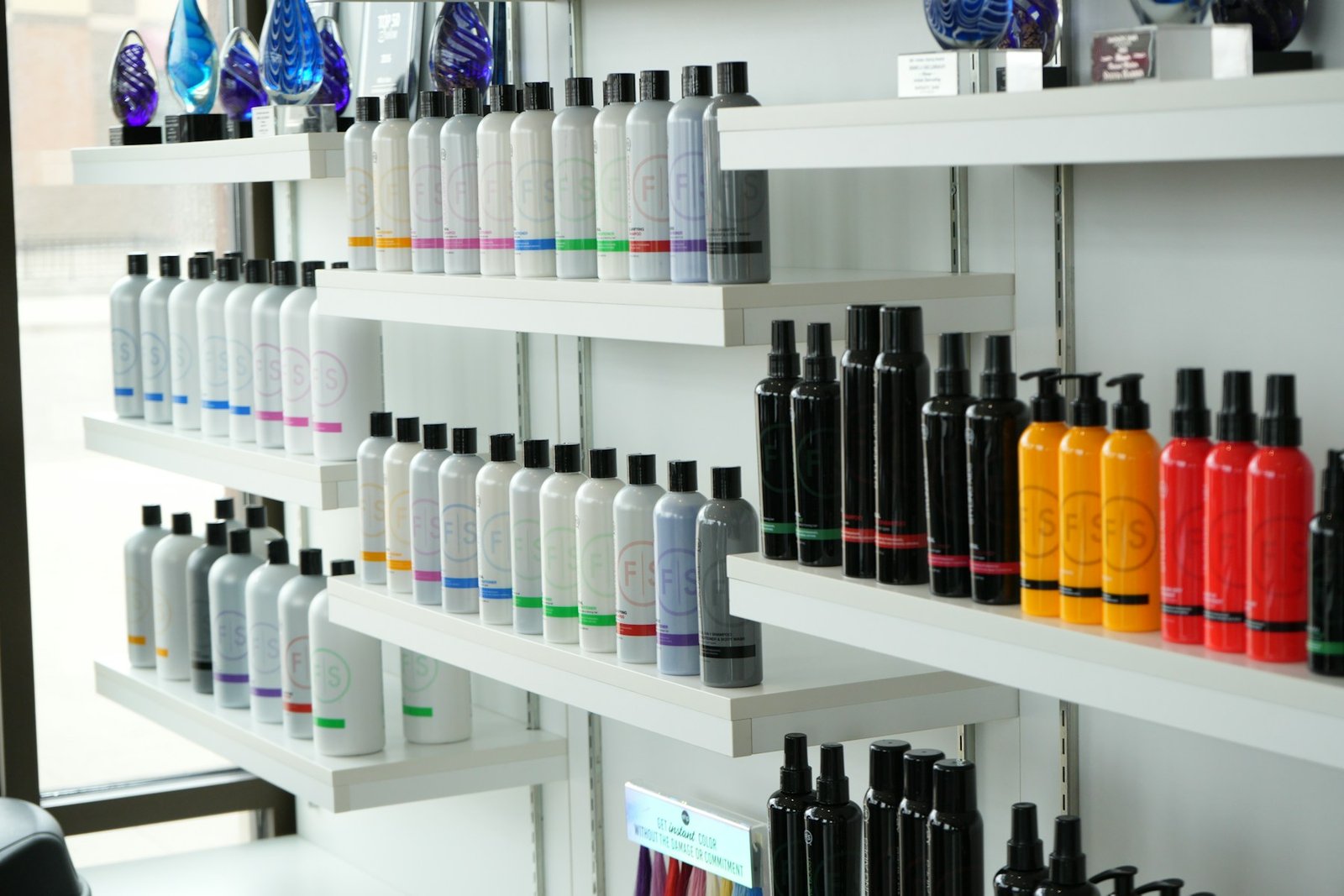
Most people do not have a haircare routine so much as a haircare archaeology: layers of half-used bottles bought during different phases of optimism. The irony is that overcrowded shelves usually contain four products doing the same job and none doing something genuinely necessary.
Five products cover almost everyone. Everything beyond them is refinement, not foundation.
1. A shampoo that suits your scalp
Note the wording: your scalp, not your hair. Shampoo is a scalp product. Its job is to remove sebum, sweat, dead skin and residue from the skin your hair grows out of. What happens to your lengths during a wash is essentially collateral.
Choose on scalp behaviour. Oily and fine hair wants something with real cleansing power. Dry, curly, coloured or sensitive scalps want a gentler surfactant base. Marketing terms such as volumising and repairing describe conditioning agents and have very little to do with the cleansing itself.
2. A conditioner that suits your lengths
The mirror image. Conditioner is a lengths product, and it does not belong anywhere near your roots unless your scalp is genuinely dry.
Match the weight to your hair, not to the shampoo it was sold beside. Fine hair needs something light enough not to collapse it; coarse or curly hair needs real substance. Buying shampoo and conditioner as a matched pair is a marketing convention, not a technical requirement — and if your scalp and lengths disagree, which is extremely common, breaking the pair is the fix.
Leave it on for the time on the bottle. Thirty seconds of contact does most of nothing.
3. A leave-in or detangler
The most commonly skipped product, and the one that prevents the most damage. Hair is at its weakest when wet, and wet detangling without slip is where a large share of breakage happens.
A leave-in gives you that slip and continues conditioning after the shower. Spray formulas work well for fine and straight hair; creams suit wavy, curly and coily textures. Apply to damp hair, then detangle from the ends upward — never from the roots down, which simply gathers every knot into one immovable mass.
4. A heat protectant
Non-negotiable if any heated tool touches your hair, and that includes a hairdryer. Styling tools regularly reach temperatures that damage the cuticle and, past roughly 175°C, begin degrading keratin itself.
A protectant does not make heat harmless. It distributes it more evenly and slows the transfer, which is the difference between hair that survives regular styling and hair that does not. Cover the mid-lengths and ends properly rather than misting vaguely at the top, and let it dry before the tool goes on — applying heat to a soaking wet section is its own problem.
If you genuinely never use heat, this is the one slot on the list you can leave empty.
5. A weekly treatment: mask or clarifier
Which one depends on your particular failure mode. If your hair is dry, damaged, coloured or coarse, you want a deep conditioning mask roughly weekly. If your hair is fine and oily and goes flat and dull, you want a clarifying shampoo every couple of weeks instead.
Some people need both on alternating weeks. Very few people need neither.
What is deliberately not on this list
Hair growth supplements, unless a blood test showed an actual deficiency. Scalp scrubs, which for most people are an expensive way to do what a clarifying shampoo already does. Bond-building treatments, which are excellent but are a repair intervention for chemically damaged hair rather than a routine staple. And a second styling cream that overlaps entirely with your leave-in.
Technique beats inventory
Shampoo the scalp, condition the lengths, detangle wet hair from the ends up, protect before heat, and treat once a week. Done consistently with five reasonable products, that outperforms a shelf of fifteen used carelessly — every time, and for considerably less money.